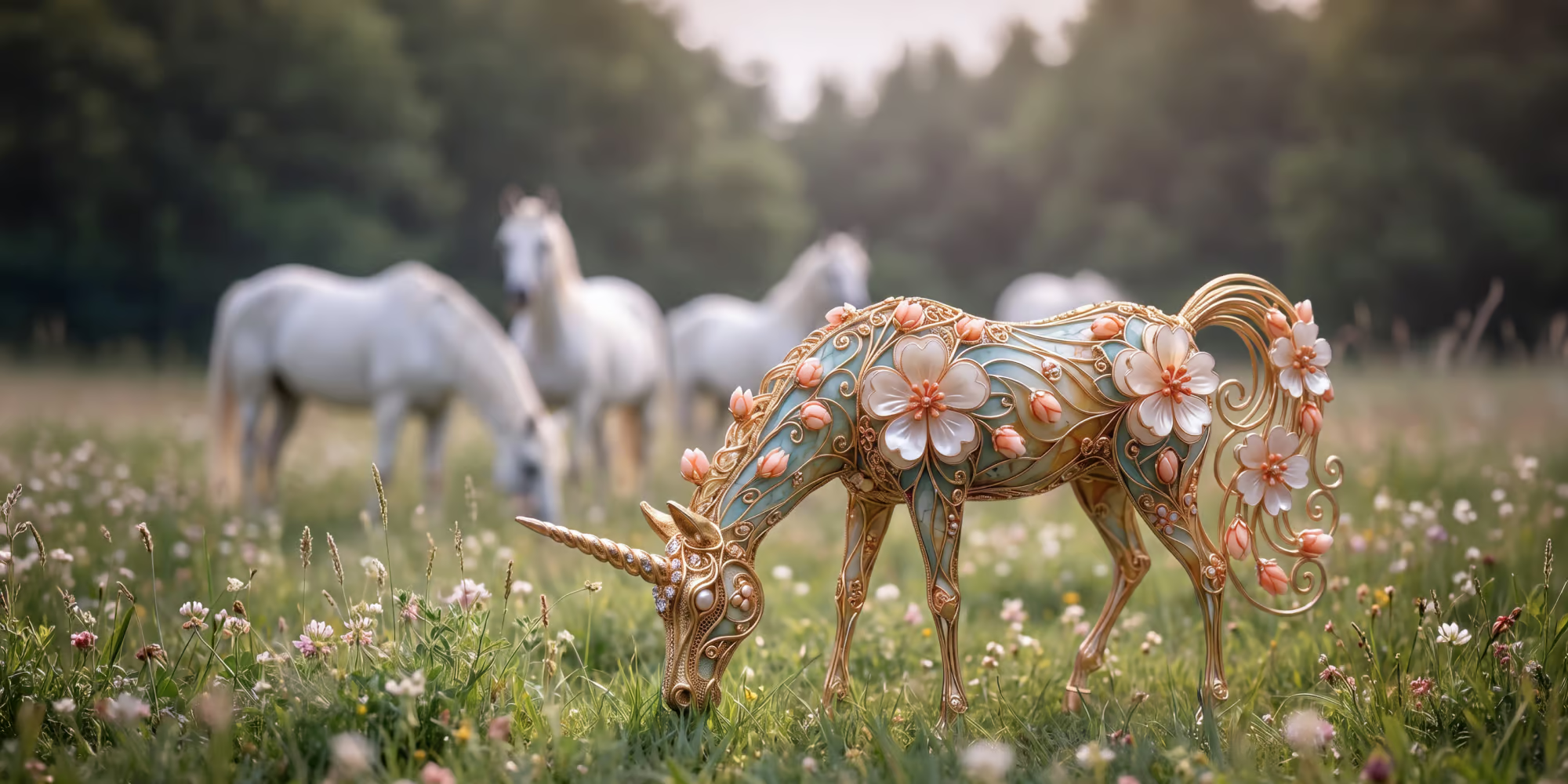
AI is changing the way we design. Faster workflows, instant prototypes and endless creative possibilities. Sounds great, right? But there’s a catch. The more we rely on AI to design without a proper prompt, the more everything starts to look the same. And before you know it, your unique brand looks suspiciously familiar.
The em dash of design
You’ve probably noticed it. You’re reading a piece of content and something feels a little too familiar. Perfectly structured sentences. Predictable phrasing. And those long dashes everywhere.
The em dash (—) has become one of the most recognisable writing habits associated with ChatGPT. Not because AI invented it, but because language models often rely on sentence structures that use it to introduce contrast, add context or emphasise a point.
And when the same punctuation keeps appearing in similar sentence patterns, readers start associating it with AI-generated content.
And guess what? The same thing is happening in design. Tools like Claude can now generate entire websites, social media posts and posters from a simple prompt. Pretty impressive. But spend enough time exploring AI-generated designs, and you’ll start noticing the same visual patterns popping up again and again.
Welcome to the AI design aesthetic.
Spot the AI: the visual clichés of AI-generated design
Just like AI-generated copy has its recognisable writing habits, AI-generated design seems to be developing its own visual language. And once you notice it, it’s hard to unsee.
- Typography that’s trying a little too hard or not hard enough. Big, bold headlines. The same clean sans-serif fonts. Similar layouts, spacing and compositions. Different words, different colours, but somehow the same design. From restaurant menus and café posters to trade fairs and landscaping businesses, AI-generated typography often falls into the same familiar patterns. What should give a brand its own personality ends up making everyone look alike.
The problem isn’t the typography itself. It’s the lack of creative choices that make it distinctive. The result? A website, poster or social media visual that looks the same but doesn’t necessarily say anything meaningful about the brand behind it. - Brush strokes everywhere. A playful brush stroke underneath a headline. A hand-drawn circle highlighting a keyword. A colourful scribble adding a supposedly human touch. These elements can make designs feel spontaneous, creative and authentic when used thoughtfully. But when the same visual tricks appear across dozens of websites, that spontaneity starts to feel pretty manufactured. And the more we see them, the easier it becomes to recognise them as typical AI-generated design elements. What was meant to add a human touch can end up revealing the exact opposite. For brands focused on sustainability, organic products or energy efficiency, that perception can be particularly damaging. After all, AI comes with an environmental footprint of its own, from energy consumption to water use. Even the suggestion of unnecessary AI use can clash with a brand’s sustainability message. Nothing says ‘unique’ quite like using the exact same creative accent as everyone else.
- Dots, dashes and decorative distractions. Fading images that look perfect. Tiny horizontal lines separating sections. Decorative shapes, floating badges and geometric accents filling empty spaces. Sound familiar? AI has a tendency to fall back on the same visual tricks, again and again. And while these details might look appealing at first glance, their constant repetition makes designs feel increasingly generic and predictable.
- The classic AI-generated website. You know the one. An oversized hero headline. A soft purple or blue gradient. Dark backgrounds. Rounded cards with little circular icons at the top. Subtle shadows and a shiny CTA button. Everything can be beautifully aligned, have consistent spacing and have a professional touch. But something is missing: personality. Because looking good and standing out are two very different things.
Why does AI keep generating similar designs?
AI doesn’t start with a unique creative vision. It generates results based on patterns learned during training, the context you provide and the instructions in your prompt.
And that’s where things get interesting. Ask AI to create a ‘modern, premium and innovative website’, and you’re giving it plenty of room for interpretation.
Because what feels modern or premium to one person might feel completely different to someone else. Our perceptions are shaped by factors like age, cultural background and personal experiences.
AI models aren’t neutral either. They’re trained on data shaped by specific cultural contexts, preferences and biases. So when you leave these subjective terms open to interpretation, AI tends to fall back on familiar visual patterns rather than challenge them.
So, should we stop designing with AI?
Not necessarily. AI offers plenty of opportunities for designers and creative teams. From streamlining workflows and speeding up prototyping to exploring ideas during the creative process. And with integrations like MCP-powered assistance in Figma, AI can increasingly support designers directly within the tools they already use.
The real opportunity isn’t to let AI make every creative decision, but to use it as a tool that supports and enhances human creativity.
It helps us visualise ideas faster, explore different creative directions, build prototypes and reduce repetitive work.
And that’s exactly where its value lies. By accelerating parts of the creative process and workflow, AI gives designers more room to focus on what really matters: strategy, storytelling, user experience and brand identity.
But there’s a difference between using AI to strengthen your creativity and letting AI make your creative decisions for you. In one scenario, you’re directing the process. In the other, you’re letting an algorithm decide what your brand should look like. And that’s a risky place to be.
How to avoid the AI-generic trap
AI isn’t the problem. Using it without direction is. Here’s how to make sure your designs don’t get lost in the growing sea of AI-generated sameness.
- Start with your brand, not your prompt
Before asking AI to design anything, get clear on what makes your brand different. What’s your personality? What do you stand for? Who are you trying to reach? And what should people feel when they interact with your brand?
The stronger your foundations, the better you can guide AI towards something meaningful. - Use AI to explore, not to copy
Let AI challenge your thinking. Use it to summarise creative briefs, develop user personas or map out user flows. Then ask it to question your assumptions, identify gaps or suggest alternative approaches to the design challenge. But treat its output as a starting point, not the finished product. Great design rarely happens on the first try. And a convincing AI-generated preview isn’t the same as a well-considered design solution. - Question the obvious choices
• Why did you choose these particular colours? Do they reflect your brand identity?
• Is this layout really the best way to present this type of information?
• Does this graphic element fit your brand identity, or is it just something AI came up with? Every visual element should earn its place. Not because popular design trends are inherently bad, but because creative decisions should be intentional. - Design for people, not just pixels
AI can quickly generate clean, visually appealing interfaces. But looking good doesn’t necessarily mean a design is intuitive, accessible or effective. That’s why human expertise and a critical human eye remain essential.
Designers need to question how an interface works, how people navigate it and whether it helps users achieve what they came for. Because a beautiful website that doesn’t work for its users is still a bad website.
AI can generate design. But can it create distinction?
The future of design isn’t about choosing between humans and AI. It’s about making them work better together. AI can accelerate production, unlock new possibilities and help us experiment in ways that weren’t possible before. But meaningful design requires more than a clever prompt. It requires understanding people. Knowing what makes a brand different. And having the confidence to make creative choices that don’t simply follow the crowd.
Because when everyone has access to the same tools, your creative vision becomes your biggest differentiator.
At Us, we believe technology should amplify creativity, not replace it. We bring human insight, design expertise and smart technology together to create digital experiences that don’t just look good, but feel distinctive and deliver real value.
So the real question isn’t whether you should use AI in your design process. It’s how you make sure your brand and digital products still looks and feels like you.

